Kalemegdan
A medieval fortress at the confluence of the Danube and Sava rivers that dominates the city. Offers views of the rivers, an on-site museum, and summer promenades on the ramparts.
 busevi.rsInternational buses Bosnia and Herzegovina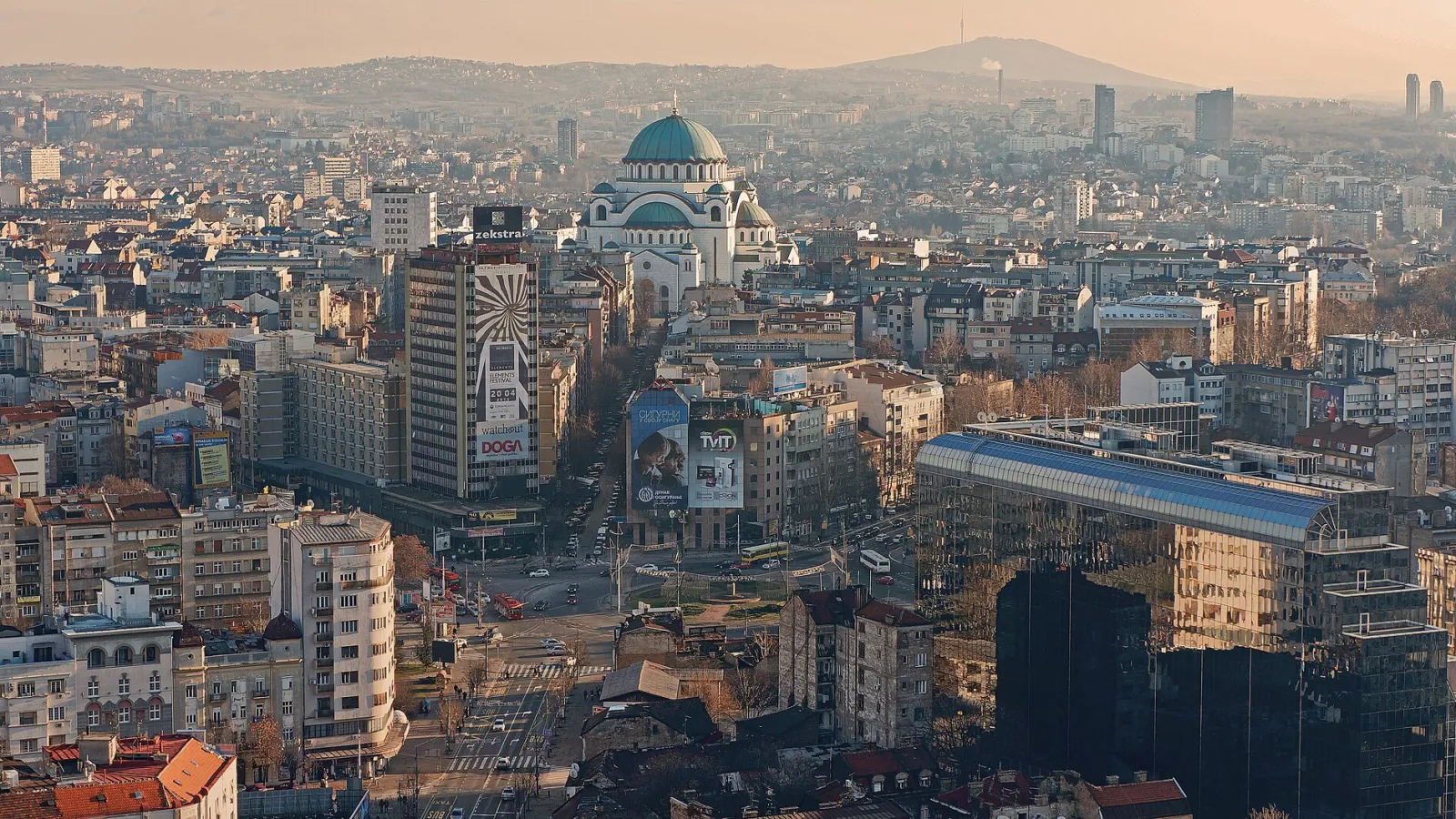
Serbia
Belgrade is Serbia's capital, a major city on the Danube and Sava rivers, known for its rich history, vibrant nightlife, and pivotal significance in the Balkans.
Foto: ZlatanJovanovic · CC BY 3.0 · Wikimedia Commons
A medieval fortress at the confluence of the Danube and Sava rivers that dominates the city. Offers views of the rivers, an on-site museum, and summer promenades on the ramparts.
A spectacular Serbian Orthodox temple built in the 20th century. Among the world's largest Orthodox churches with a golden dome visible from a distance.
A historic area on the opposite bank of the Danube featuring Austro-Hungarian architecture. Known for Gardoš Tower, old streets, riverside cafes, and views back across to Belgrade.
Dedicated to the Serbian inventor and scientist Nikola Tesla. Houses his personal collection, memorabilia, and documents his scientific work and legacy.
The main pedestrian boulevard with shops, restaurants, and cafes. A historic zone with period buildings that forms the heart of the tourist center.
Belgrade is one of Europe's oldest cities, with a culture spanning thousands of years. Positioned at the confluence of the Danube and Sava, the city has been the center of various empires and cultures — from Roman times through Ottoman occupation to Austro-Hungarian rule. This layered historical continuum makes Belgrade a unique place where East and West literally meet.
Visitors typically come to see Kalemegdan, the fortress that dominates the skyline, and then explore old neighborhoods like Dorćol and Voždov venac. Belgrade is renowned for its social scene — cafes, clubs, and restaurants operate late into the night. Museums, galleries, Zemun with its Austro-Hungarian atmosphere, and a dynamic food culture attract travelers of all ages.
There are 16 departures from Bosnia and Herzegovina to Belgrade (Serbia). They leave from: Bijeljina, Tuzla, Prijedor, Banja Luka, Brčko. Travel time and every stop along the way are listed with each departure.
Below is a short guide to the city as well: what it is known for, what to see and what a traveller arriving by bus should know.
Yes — 16 departures from Bosnia and Herzegovina, from: Bijeljina, Tuzla, Prijedor, Banja Luka, Brčko.
The fastest trip takes 2 h 15 min. The time comes from the timetable and does not include waiting at the border.
Kalemegdan, Sveti Sava, Zemun, Nikola Tesla Museum, Knez Mihailova Street
At these stations: Novo groblje, Beograd AS, Ladne vode, Farma, Batajnica centar, Robna kuća. Open a station for its board of departures and arrivals.
The data is for information only: it is transcribed from the public timetables of operators running international lines. Always check the departure, arrival, platform and border crossing conditions with the operator or at the bus station — timetables can change without notice. For a trip abroad also check whether you need a visa and travel insurance, and bring a valid passport or ID card. busevi.rs does not sell tickets and is not responsible for delays, changes or cancelled departures.