Cathedral of the Assumption of Mary
A dominant Gothic cathedral with two distinctive towers on the city skyline. Built over centuries starting from the 13th century, it is Zagreb's most important religious structure.
 busevi.rsInternational buses Bosnia and Herzegovina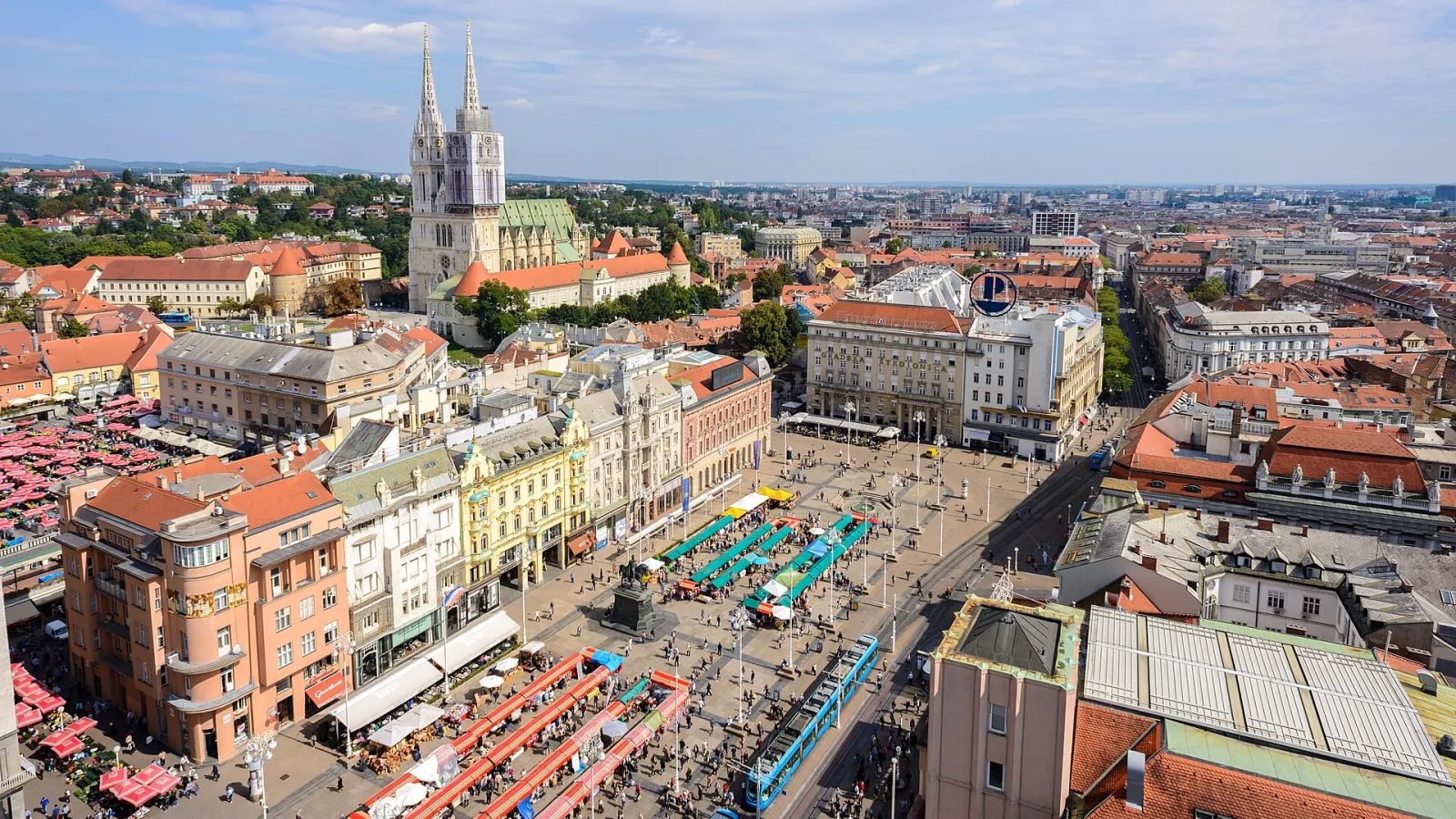
Croatia
Zagreb is the capital of Croatia, situated on the Sava River, known for its rich history, culture, and architecture.
Foto: Nick Savchenko from Kiev, Ukraine · CC BY-SA 2.0 · Wikimedia Commons
A dominant Gothic cathedral with two distinctive towers on the city skyline. Built over centuries starting from the 13th century, it is Zagreb's most important religious structure.
A narrow, winding street with old houses converted into cafes, restaurants, and shops. It is the heart of Zagreb's nightlife and a perfect example of old-town charm with modern appeal.
An important museum showcasing Croatian history from the 19th century to the present. Located in the Lower Town, it provides insight into the region's complex past.
Remains of the Upper Town's old fortifications. Lotrščak Tower is a former defensive structure famous for its noon cannon. Both offer views across the entire city.
The main city square featuring a monument, surrounded by historic buildings and modern commerce. It is the heart of the Lower Town and the primary gathering point.
02:30
↓ 06:00
Krupa N/VZagreb
Centrotrans · Daily
via Banja Luka · Laktaši · Nova Topola · Bosanska Gradiška +1
0 km · 8 stops
02:30
↓ 06:00
Krupa N/VZagreb
Centrotrans · Daily
via Banja Luka · Laktaši · Nova Topola · Bosanska Gradiška +1
0 km · 8 stops
02:30
↓ 06:00
Krupa N/VZagreb
Centrotrans · Daily
via Banja Luka · Laktaši · Nova Topola · Bosanska Gradiška +1
0 km · 8 stops
03:15
↓ 06:00
Banja LukaZagreb
Centrotrans · Daily
via Laktaši · Nova Topola · Bosanska Gradiška · Stara Gradiška
0 km · 7 stops
Zagreb is the cultural and political center of Croatia with a history dating back to the 11th century. The city spans both banks of the Sava and is known for its distinctive layout – the Upper Town (old center) dominates a hillside with narrow streets and churches, while the Lower Town spreads across flat terrain with museums, theaters, and green spaces. The city appeals to those who enjoy walking through historic streets, visiting museums, and tasting local cuisine.
Zagreb attracts visitors with a blend of old Balkan charm and modern European influence. The city has an active nightlife, numerous cafes and restaurants, and serves as an excellent starting or ending point for travels through Europe. Its strategic location enables easy connections to Austria, Slovenia, and the rest of the Balkans.
There are 62 departures from Bosnia and Herzegovina to Zagreb (Croatia). They leave from: Bosanska Gradiška, Maglaj, Nova Topola, Žepče, Laktaši, Banja Luka. Travel time and every stop along the way are listed with each departure.
Below is a short guide to the city as well: what it is known for, what to see and what a traveller arriving by bus should know.
Yes — 62 departures from Bosnia and Herzegovina, from: Bosanska Gradiška, Maglaj, Nova Topola, Žepče, Laktaši, Banja Luka.
The fastest trip takes 1 h 45 min. The time comes from the timetable and does not include waiting at the border.
Cathedral of the Assumption of Mary, Tkalčićeva Street, Museum of Contemporary History, Petrova Hill and Lotrščak Tower, Ban Jelačić Square
At these stations: Zagreb Airport, Zagreb, Zagreb. Open a station for its board of departures and arrivals.
The data is for information only: it is transcribed from the public timetables of operators running international lines. Always check the departure, arrival, platform and border crossing conditions with the operator or at the bus station — timetables can change without notice. For a trip abroad also check whether you need a visa and travel insurance, and bring a valid passport or ID card. busevi.rs does not sell tickets and is not responsible for delays, changes or cancelled departures.