Palace of Parliament
One of the world's largest buildings, a massive structure from the socialist era that dominates the city's skyline. It stands as the architectural symbol of Bucharest and can be visited by organized tour only.
 busevi.rsInternational buses Serbia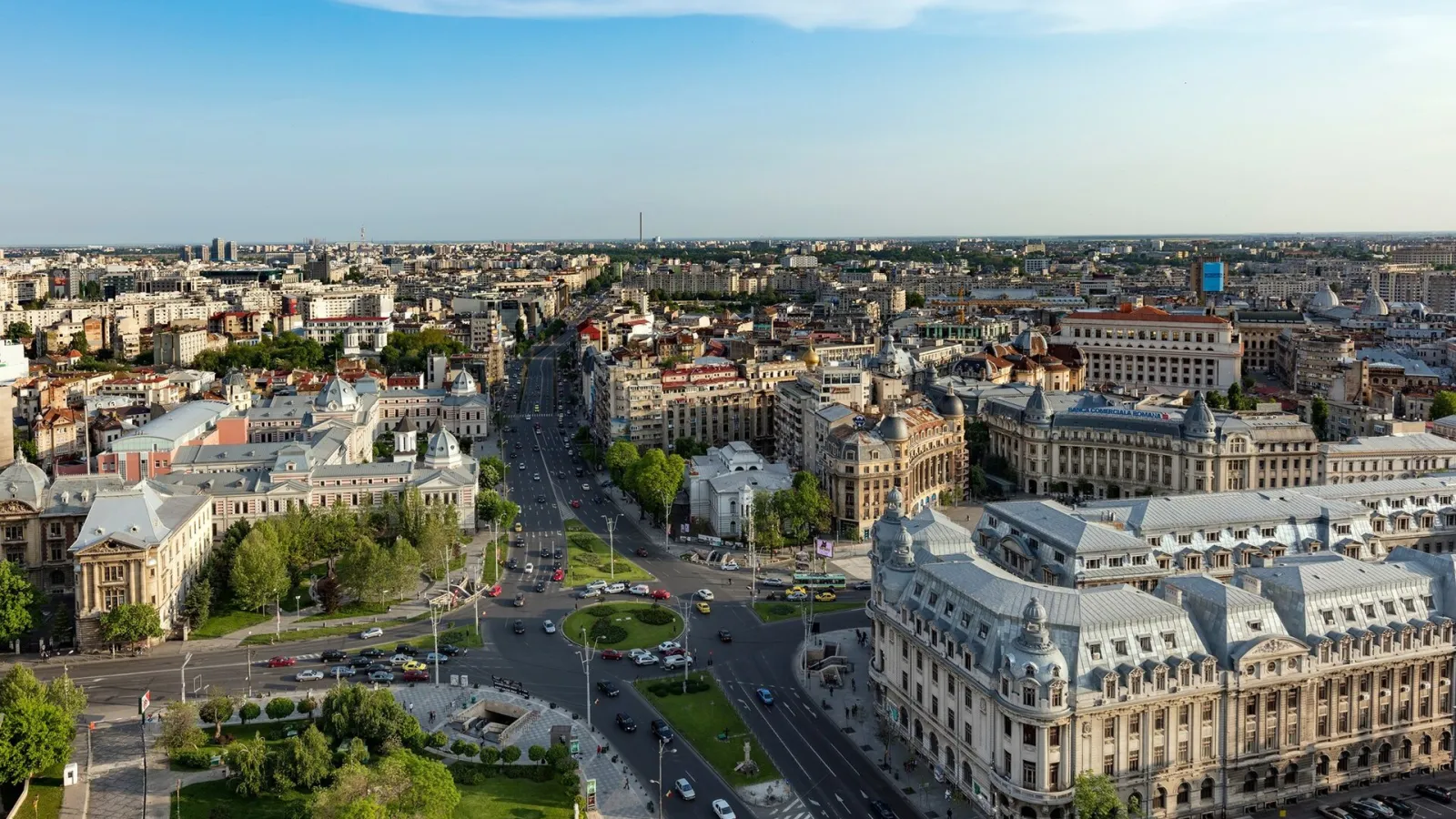
Romania
Bucharest is the capital of Romania, located on the Wallachian Plain in the southeastern part of the country.
Foto: Madalin Pentelie · CC0 · Wikimedia Commons
One of the world's largest buildings, a massive structure from the socialist era that dominates the city's skyline. It stands as the architectural symbol of Bucharest and can be visited by organized tour only.
The central city square with significant historical importance — the site of the pivotal events that led to the fall of communism in 1989. Surrounded by important institutions, museums, and government buildings.
Dedicated to authentic Romanian culture and heritage, featuring valuable collections of crafts, textiles, and objects from rural life. A unique collection offering deep insight into traditional Romanian ways.
The historic center with narrow streets, restaurants, and small shops. A pleasant area for walking and experiencing the old city atmosphere and local character.
An island monastery on Lake Snagov, located just outside the city. A peaceful place with historical significance, ideal for a day trip and experiencing nature near the capital.
Bucharest is a large European city with a rich and complex history reflected in its diverse architecture — from Austro-Hungarian villas and French-influenced boulevards to Soviet-era monuments. The city is known for its wide avenues, parks, and museums that tell stories from different periods. It has evolved into a vibrant cultural center with theaters, galleries, and cafes that cater to locals and visitors alike.
Visitors to Bucharest can expect an atmosphere where old and new constantly intertwine. The city offers museums, historical sites, and local markets, as well as a growing dining and entertainment scene at affordable prices. While the city may seem chaotic at first glance, it is generally safe for tourists and far less expensive than many Western European capitals. Getting around is straightforward with public transport, and locals are often helpful to visitors.
There are 4 departures from Serbia to Bucharest (Romania). They leave from: Drobeta-Turnu Severin. Travel time and every stop along the way are listed with each departure.
Below is a short guide to the city as well: what it is known for, what to see and what a traveller arriving by bus should know.
Yes — 4 departures from Serbia, from: Drobeta-Turnu Severin.
The fastest trip takes 5 h 10 min. The time comes from the timetable and does not include waiting at the border.
Palace of Parliament, Revolution Square (Piața Revoluției), Museum of Traditional Folk Art, Old Town (Lipscani), Snagov Monastery
At these stations: Bucharest (Militari). Open a station for its board of departures and arrivals.
The data is for information only: it is transcribed from the public timetables of operators running international lines. Always check the departure, arrival, platform and border crossing conditions with the operator or at the bus station — timetables can change without notice. For a trip abroad also check whether you need a visa and travel insurance, and bring a valid passport or ID card. busevi.rs does not sell tickets and is not responsible for delays, changes or cancelled departures.