On paper, a timetable looks like a plain list of numbers: a departure at this time, then the next, then the next. Behind that list sits a chain of decisions that all have to line up — how long a vehicle actually takes to travel, how many vehicles are available, how many drivers are working that day, and how much the line is allowed to cost.
Here's how a single route turns into a list of departures.
Measure first, plan second
The first step isn't drawing up times, it's measurement. An operator needs to know how long a vehicle really takes from one end of the line to the other — not how long it would take at the speed limit, but how long it takes in real traffic, with stops, signals and congestion.
That figure isn't a single number. The same distance takes noticeably different times at seven in the morning and at noon on a Sunday.
Why running time is split by hour
So running time is broken into periods: early morning, morning peak, midday, afternoon peak, evening. Each period gets its own expected duration.
Skip this, and you get a timetable that's accurate roughly twice a day — too tight for the peak, so everything runs late, or too generous for the night, so vehicles sit and wait.
Headway: how often vehicles depart
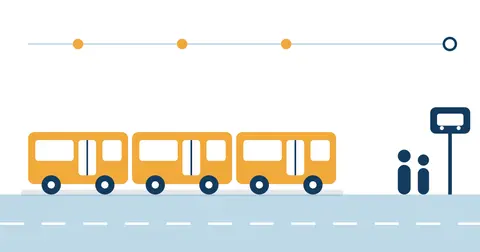
Headway is the gap between two consecutive departures. It answers the question of how many people travel in that direction at that hour, and how many vehicles the operator has to cover it.
Headway depends on:
passenger numbers in that part of the day
vehicle capacity — an articulated bus holds far more than a standard one, so the same demand can be carried with less frequent departures
how many vehicles and drivers are available
how much the line is allowed to cost
Because of those last two, headway is always a compromise. A denser timetable means more vehicles in service, more shifts and higher cost.
Cycle time: turning headway into a fleet count
The arithmetic here is simpler than it looks.
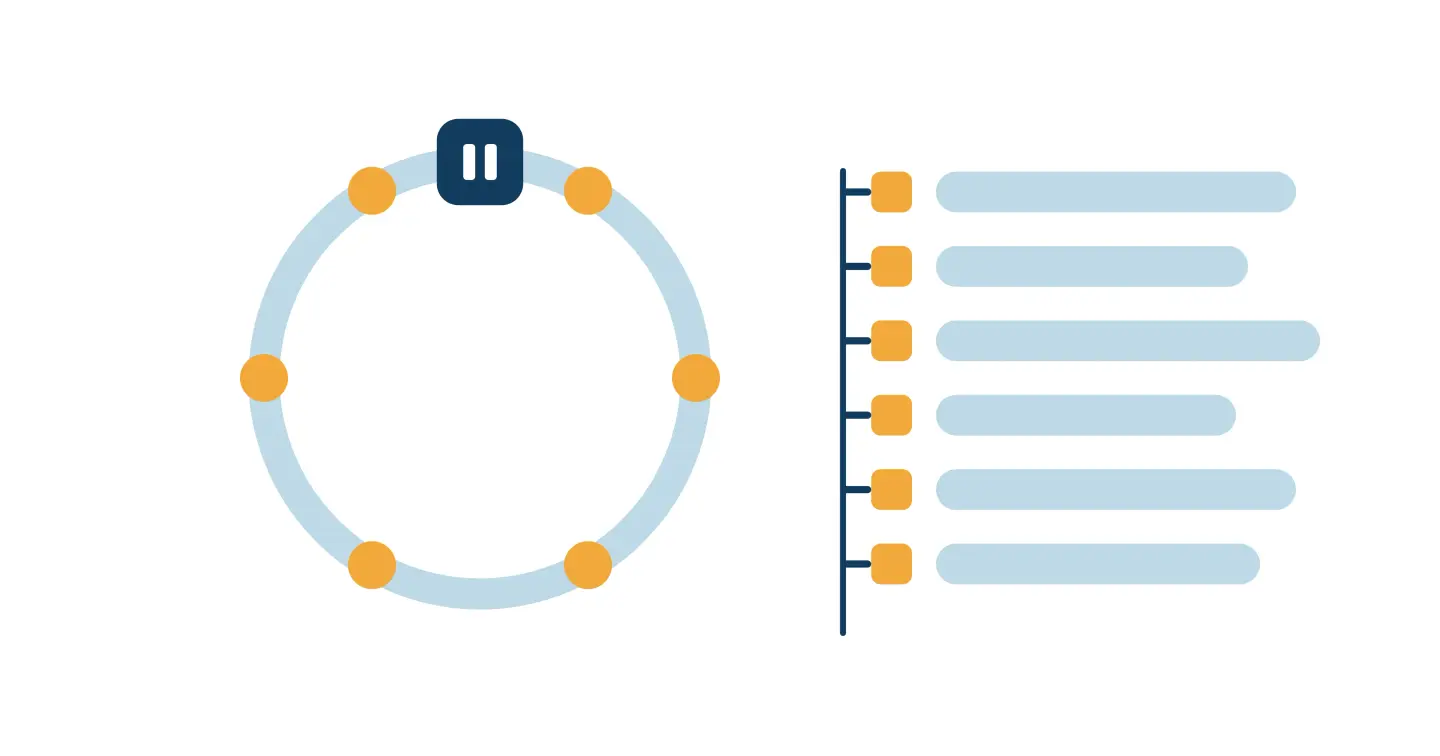
Round-trip time is what a vehicle needs to cover the line in both directions and return to the start, including time held at the termini. The number of vehicles required to sustain a given headway is roughly the round-trip time divided by the headway.
If a round trip takes an hour and you want a departure every ten minutes, you need six vehicles. Every five minutes? Twelve.
This is why extending a line is never free. Every extra minute of round-trip time demands either more vehicles to hold the headway, or less frequent departures.
The day's work assigned to one vehicle and its crew is called a duty, or run. It has to fit driver shifts, breaks and the time needed to change crews.
Recovery time: why a vehicle sits at the terminus
Slack is deliberately built into the round trip at each end of the line. It does two jobs.
First: if a vehicle arrives late, it can still start its next trip on time, so the delay doesn't carry through the whole day.
Second: the driver is entitled to a break between trips.
Too little slack and one morning delay drags on until evening. Too much and vehicles and staff sit idle, which costs money. That's why you sometimes see a bus waiting at the terminus even though it's full of passengers — its departure time simply hasn't come.
We looked at how delay spreads through the day in our piece on bus bunching; the effects are easiest to follow on a line's own page, for example line 16.
Why weekdays, Saturdays and Sundays get separate timetables
Travel isn't spread evenly across the week. On weekdays there are two clear peaks, morning and afternoon, tied to work and school. Saturday's peak is flatter and shifted later. Sunday is the most even and the lightest.
So in practice one line carries three different timetables, and some carry a fourth for holidays or school breaks. Which one applies on which day is shown on the line's page and through the stops list.
Why the timetable sometimes doesn't match reality
A timetable is a plan built on averages, and traffic isn't average. Accidents, roadworks, weather and holidays shift everything.
That's why good arrival displays combine two things: the scheduled departure from the timetable and the vehicle's actual position. We explain how to read the difference between them in our guide.
Frequently asked questions
Why does the timetable change several times a year?
Usually for seasonal reasons. The school year, summer break and holidays change passenger numbers, and headway changes with them. Route changes for roadworks also require running time to be measured again.
Can a driver leave earlier than the scheduled time?
No. Leaving early is a bigger problem than running late, because a passenger who arrived on time is left standing at the stop.
Why do some lines only run at peak hours?
Because outside the peak there aren't enough passengers to justify a vehicle and crew. Such lines usually supplement a base line on the same corridor during the busiest hours.