History
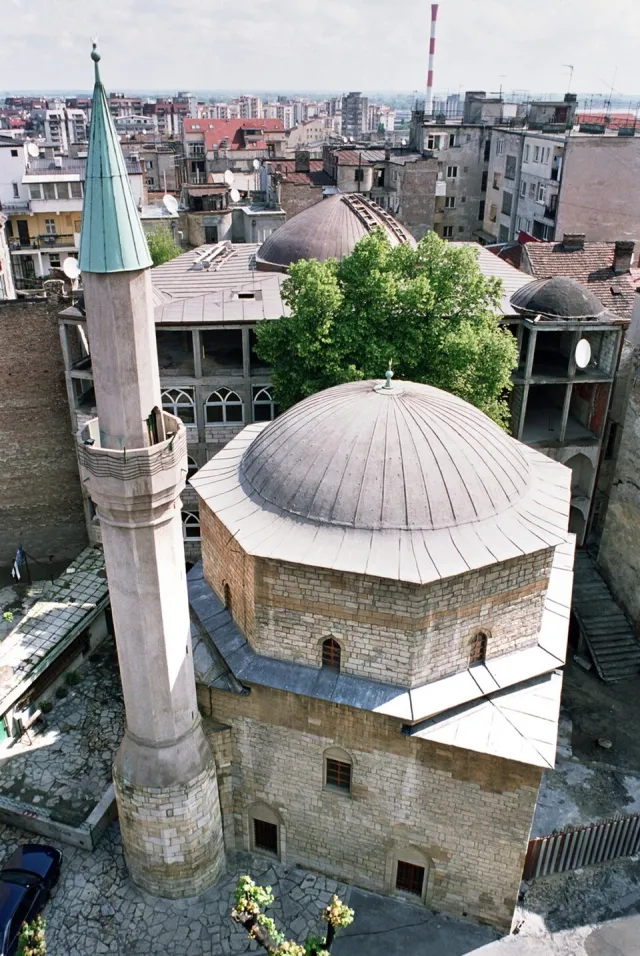
The Bajrakli Mosque was built at the end of the 16th century, at a time when Belgrade, under Ottoman rule, had dozens of Islamic houses of worship scattered across the town. It was originally called the Čohadži Mosque, after the cloth merchant Hadži-Alija, who paid for its construction. It acquired its present name only later, in the 18th century, because a flag (bajrak) was flown from it to signal the start of communal prayer in all of Belgrade's mosques.
Over the centuries it changed both its function and its appearance several times. During Austrian rule over Belgrade, between 1717 and 1739, the building was converted into a Catholic cathedral, only to be restored to its original religious function after the return of the Turks in 1741, thanks to Husein-beg.
In the 19th century, the Serbian rulers of the Obrenović dynasty saw to the building's restoration, which is how it survived into modern times. In 2004, during the unrest over the situation in Kosovo, the mosque was set on fire, but it was later partly restored.
Architecture and significance
It is a simple, single-space structure of cubic form, covered by a dome, with a slender minaret rising beside it. It is built mainly of stone, with certain sections of brick, and its octagonal dome rests on squinches and niches typical of the Oriental building tradition of that period.
Today the Bajrakli Mosque is the only active mosque in Belgrade and serves as the main religious and cultural gathering place for the city's Muslim community. As such, it preserves the continuity of an Islamic presence in Belgrade that has lasted for several centuries.
Good to know
The mosque stands at Gospodar Jevremova Street No. 11, in the very center of Belgrade, close to Kalemegdan and Dorćol, making it easy to include in a walk through the old part of the city.
It was designated a cultural monument as early as 1946, and in 1979 it was granted the status of a cultural monument of great importance, confirming its historical and architectural value.