History
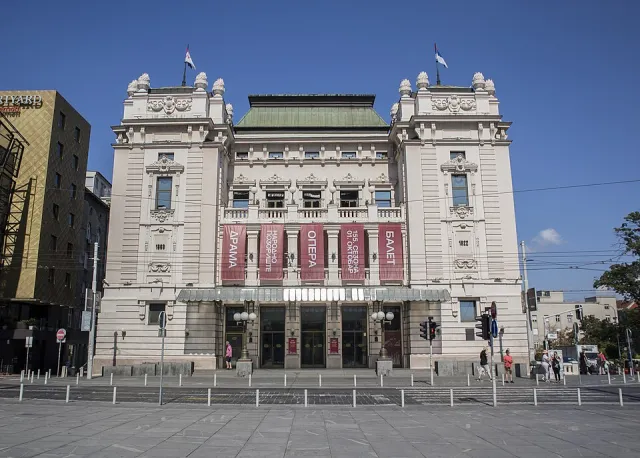
The National Theatre in Belgrade was founded in 1868, and the first play performed for audiences was “Durad Brankovic”, staged on 22 November of that same year. The building was designed by the architect Aleksandar Bugarski, and construction began with the demolition of old Turkish houses in March 1868 on the site of today's Republic Square. The theatre finally moved into its new building on 30 October 1869.
It is worth noting that the theatre was raised precisely on the spot where the Stambol Gate once stood, one of the city gates of Ottoman Belgrade. Parts of the demolished gate were built into the very foundations of the building, so this new cultural institution literally stands on the remains of the old city.
Over the course of its history the building was thoroughly renovated several times — in the period 1912–1922, then in 1941 and 1965. The largest and most significant reconstruction was carried out between 1986 and 1989, with an investment of 4.5 million dollars, and it was ceremonially reopened on 15 October 1989.
Architecture and significance
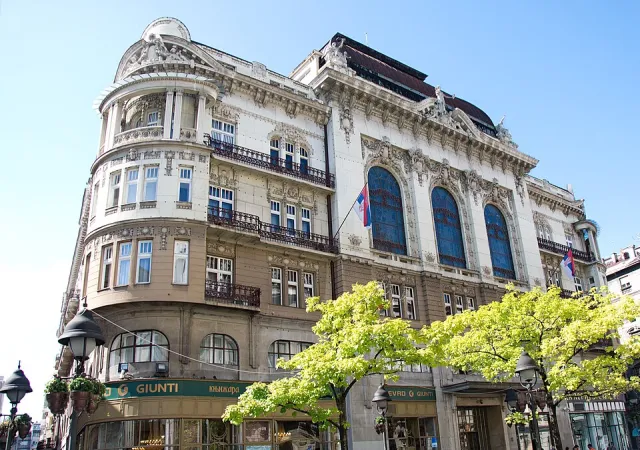
The building was constructed in the spirit of Academicism, with a clear horizontal and vertical division of the facade reminiscent of the famous La Scala in Milan. That resemblance is no accident — Bugarski took inspiration from the great European opera houses of his time, wishing to give Belgrade an edifice worthy of a capital on the rise.
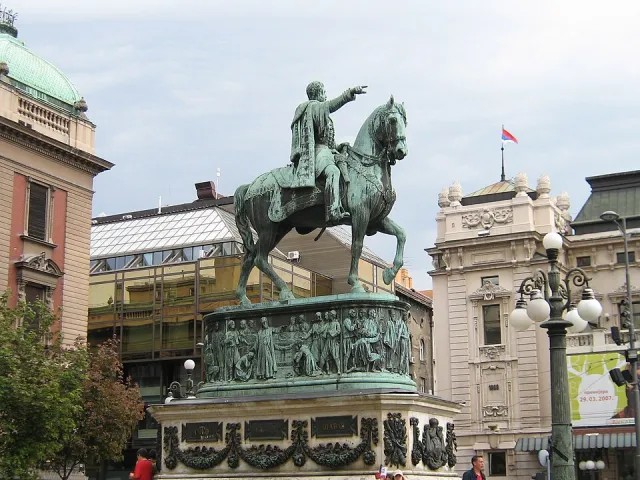
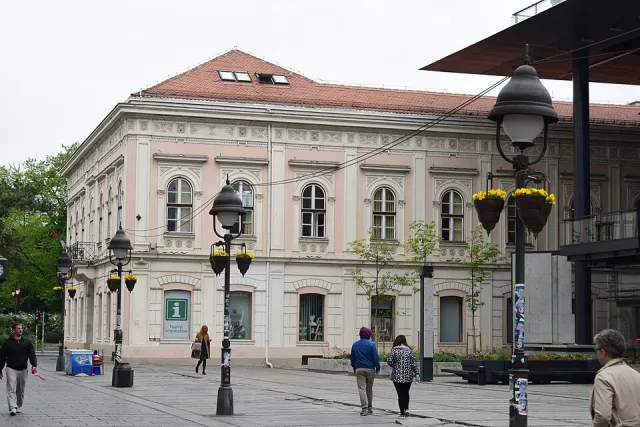
Today the National Theatre brings together three artistic ensembles — the Opera, the Ballet and the Drama — which perform in turn on the Main Stage and on the smaller “Rasa Plaovic” stage. It stands right on Republic Square, at the corner of Vasina and Francuska Streets, making it an unmissable stop for anyone strolling through the city centre.