History
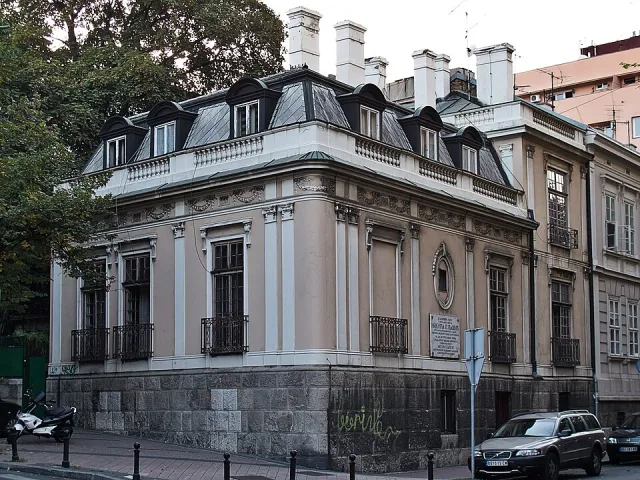
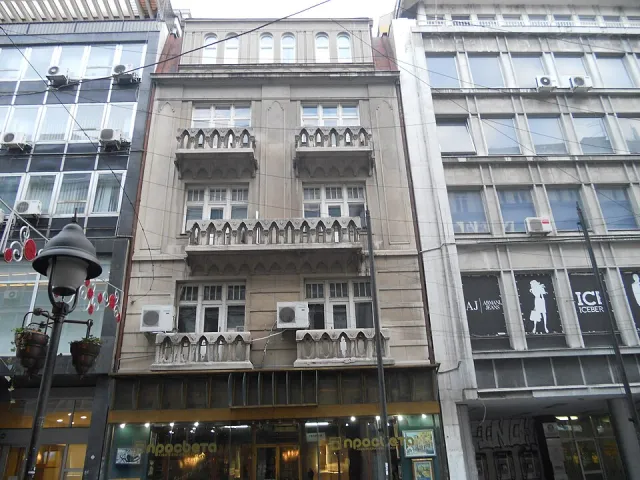
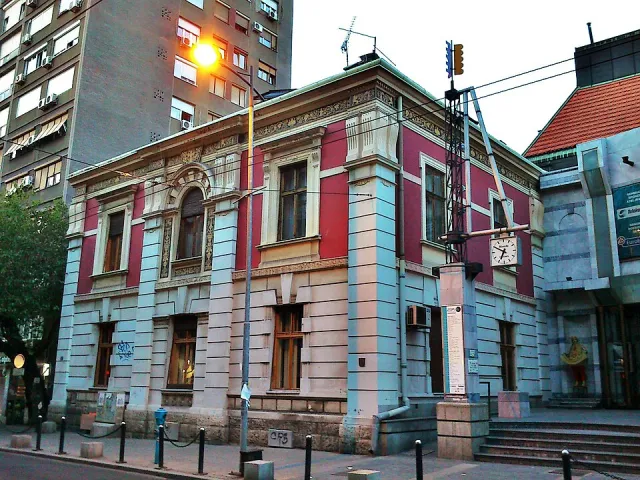
The house on Svetogorska Street was built in 1896 by the architect Milan Kapetanović as a family residence intended for the daughter of Jevrem Grujić. Its facade is covered with distinctive decoration imitating the sgraffito technique, executed by the Italian master Domenico D'Andrea, so the house stands out from the surrounding buildings on the street at first glance.
Over the decades, the walls of this villa witnessed several different chapters of Belgrade's history. In 1912, according to the records, it was here that Serbia and Bulgaria concluded a secret agreement on the joint liberation of the South Slavic lands, and later the building also served as the Belgian legation and the seat of a French charitable society.
During the Second World War the house was used for a time as a Partisan hospital, while in 1967, in a brighter moment of its history, Belgrade's first discotheque opened within its walls.
Architecture and significance
This single-storey villa belongs to the Historicist style, with Renaissance and Baroque elements harmoniously blended into a unified whole on the facade. Inside, the marble floors, wrought iron and a valuable collection of paintings by Serbian artists have been preserved, giving the house a distinct museum quality.
Thanks to its excellent state of preservation and historical importance, in 1961 this building became the first house in Belgrade to be declared a cultural monument by the Institute for the Protection of Cultural Monuments, paving the way for the protection of other valuable buildings in the city.
Good to know
Today the house is home to the Jevrem Grujić House, a private museum that has been organising exhibitions and cultural programmes since 2015, so visitors can see the interior and the art collection in a space that was once the setting for both serious diplomatic and entirely relaxed Belgrade moments.
The house stands at 17 Svetogorska Street in Stari Grad, close to the centre of Belgrade, making it easy to fit a visit into a stroll through this part of the city.