History
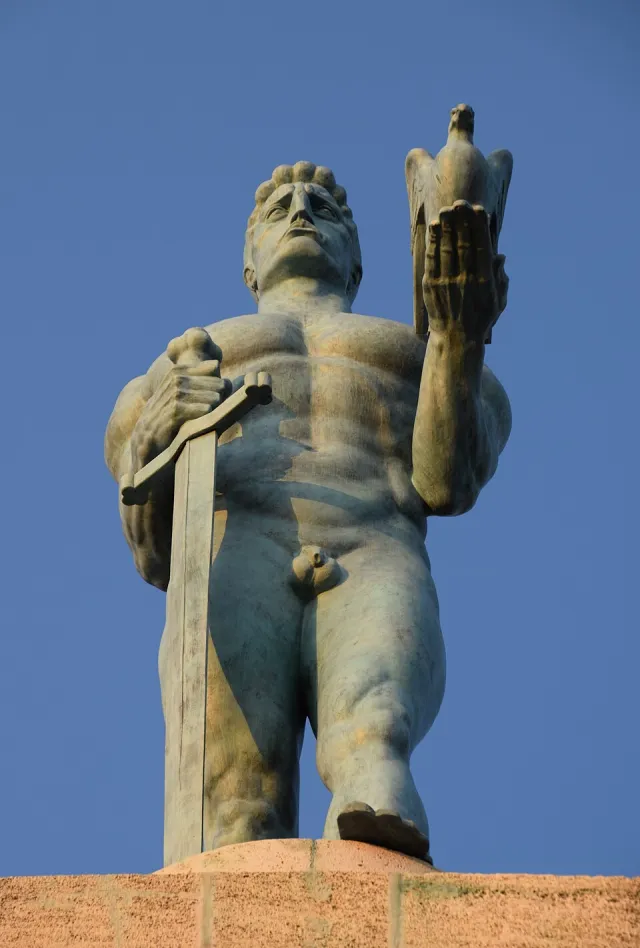
The Victor Monument was created to commemorate the Serbian victories in the First Balkan War and the breakthrough of the Salonika Front in the First World War, with the idea for it first arising as early as 1912–1913. The bronze figure is the work of the renowned sculptor Ivan Meštrović, while the pedestal, shaped as a fluted Doric column, was designed by the architect Petar Bajalović. It was officially unveiled on 7 October 1928, the same day the new section of the Sava slope beneath the fortress was opened.
The monument was originally meant to stand on Terazije, in the very centre of the city, but that proposal sparked public controversy. One of the reasons cited was that a nude male figure on a busy city square was considered inappropriate, so it was decided to move the monument to Kalemegdan, where it still stands today.
Art and Symbolism
The Victor depicts a bronze male figure holding a falcon in his left hand and a lowered sword in his right — symbols of vigilance and of freedom defended. The figure stands on a tall fluted Doric column set upon a cubic base, rising above the fortress and the river confluence as a recognisable silhouette of the city.
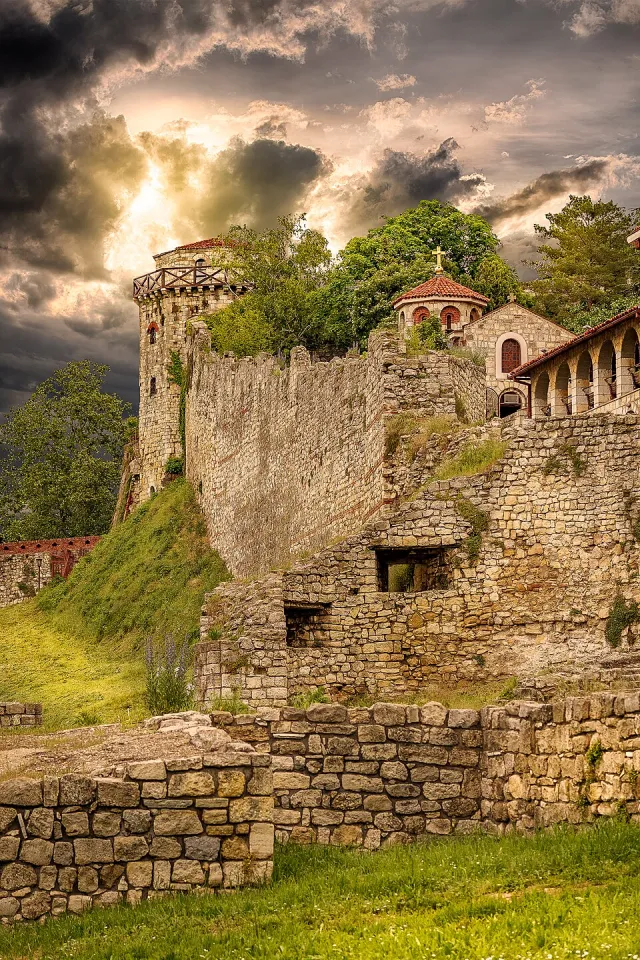
The monument was conceived as a herald of victory and a reminder of the sacrifices and triumphs of the Serbian army, and over time it grew into one of Belgrade's most recognisable symbols. Today it stands at the highest point of Kalemegdan and is a favourite spot for photographs and for taking in the view of the Sava flowing into the Danube.