History
The first botanical garden in Belgrade was founded in 1853 by Josif Pančić, a professor who believed that the plant world could not be learned from books alone, but also in a living garden. That first garden was modest and stood in the courtyard of the Lyceum; later, in 1874, it was moved to Dorćol and given the official name of the Serbian Royal Botanical Garden. Unfortunately, the Dorćol location was regularly damaged by floods, so the garden's survival remained uncertain.
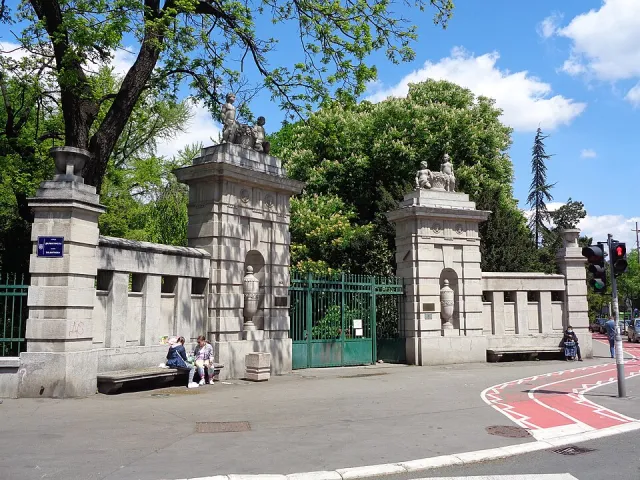
The solution came in the late 1880s, when King Milan Obrenović donated his estate of more than five hectares at the current location near Takovska Street. At the king's wish the garden was named Jevremovac, in honour of his grandfather Jevrem, and Stevan Jakšić became its first director. As early as 1892 a large glasshouse was erected, commissioned from a factory in Dresden, which at the time was considered one of the finest in Europe.
Architecture and significance
The Jevremovac glasshouse, covering about 500 square metres, was built in the Victorian style with Art Nouveau details, with two wings connected by a central dome. Today around 1,100 plant species grow inside it, while the garden as a whole holds more than 2,000 native and foreign species, among which the Serbian spruce (Pančić's omorika), an endemic species that grows only in Serbia, holds a special place. The garden also preserves pedunculate oak trees more than 140 years old.
Besides its living collection of plants, Jevremovac keeps an enormous herbarium with more than 250,000 specimens and a library of over 7,000 books, including rare editions several centuries old. Owing to its natural and cultural value, the garden was declared a natural monument in 1995 and a cultural monument in 2007.
Good to know
Beneath the administrative building lie the so-called king's ice houses, old underground chambers where ice from the Danube was once stored to keep food cool. During the landscaping works at the end of the 19th century, the remains of a Roman necropolis were also found on this site, testifying to the long history of this part of the city.
Today Jevremovac is open to visitors every day and is a favourite spot for a stroll and a rest right in the centre of Belgrade. It is also often chosen as a venue for weddings and film shoots, and specialist exhibitions and guided tours through the garden are occasionally organised, including a special Japanese garden, a gift from Japan on the occasion of the garden's anniversary.